Contents:
- The Chemistry Behind Why Salons Wash Hair After Colouring
- Removing Excess Colour Molecules
- Stopping the Chemical Reaction Completely
- Sealing the Hair Cuticle
- Why Colouring Without Proper Rinsing Goes Wrong
- At-Home Mistakes From Skipped Rinsing
- Over-Processing Damage
- The Salon Washing Process: What Exactly Happens
- First Rinse: Lukewarm Water
- Colour-Safe Shampoo Application
- Deep Conditioning Treatment
- Final Cool Rinse
- What the Pros Know: Insider Information
- Cost Factors in Professional Post-Colour Washing
- What You’re Paying For
- At-Home Post-Colour Costs
- The Real-World Difference: One Woman’s Experience
- At-Home Post-Colour Rinsing: How to Do It Correctly
- Temperature Progression
- Rinsing Duration
- Shampoo and Conditioning
- Frequency of Post-Colour Washing
- FAQ: Common Questions About Post-Colour Washing
- Can I wash my hair the day after colouring?
- Why does my hair feel different immediately after professional colouring?
- What if I only rinsed with tap water, not shampoo?
- Does professional colour rinsing really make that much difference?
- Can I use hot water after colouring if I apply oils?
- Making Post-Colour Care Your Standard
You’ve sat through a two-hour colouring appointment, and your stylist’s final step is always the same: a thorough wash and rinse. It might seem straightforward, but it’s actually critical chemistry. Salons wash your hair after colouring for multiple essential reasons that directly affect colour longevity, hair health, and your results. Understanding this process explains why rushing home immediately after colouring, skipping the rinse, or using tap water alone at home creates dramatically different outcomes than professional finishing.
The Chemistry Behind Why Salons Wash Hair After Colouring
Removing Excess Colour Molecules
Hair dye contains pigment molecules that’ve opened the cuticle and deposited into the cortex during processing. Once time’s up, you stop the chemical reaction by rinsing. However, pigment molecules remain loosely clinging to the cuticle surface—not permanently locked in yet. A vigorous wash removes these surface molecules that haven’t fully bonded. If these residual molecules remain, they sit on the cuticle, causing uneven colour appearance and accelerated fading.
Think of it like planting seeds: some seed molecules have firmly rooted (inside the cortex); others are just sitting on top of the soil (on the cuticle). The rinse removes the surface seeds that won’t become healthy plants.
Stopping the Chemical Reaction Completely
Rinsing with cool water stops the developer from continuing to process. Developer (the chemical that opens hair and allows dye molecules to penetrate) remains active until rinsed away. Leaving it on even briefly after the recommended time causes over-processing: uneven colour lift, damage to hair structure, and brittleness. A proper post-colour rinse halts this immediately.
Hair colour develops through exact timing. Leaving colour on 45 minutes causes different results than 50 minutes. The wash stops this timer precisely when it should be stopped.
Sealing the Hair Cuticle
Cool water closes the cuticle, creating a smooth surface that locks colour in and reduces fading. Hot water keeps the cuticle open—allowing colour molecules to escape and external damage to penetrate. Salons use cool water (20–25°C) specifically to seal the cuticle after colouring. This is why the final rinse feels surprisingly cold.
If you rinsed with warm water at home, you’d be actively undoing the colour-sealing process. Cool water is non-negotiable for colour longevity.
Why Colouring Without Proper Rinsing Goes Wrong
At-Home Mistakes From Skipped Rinsing
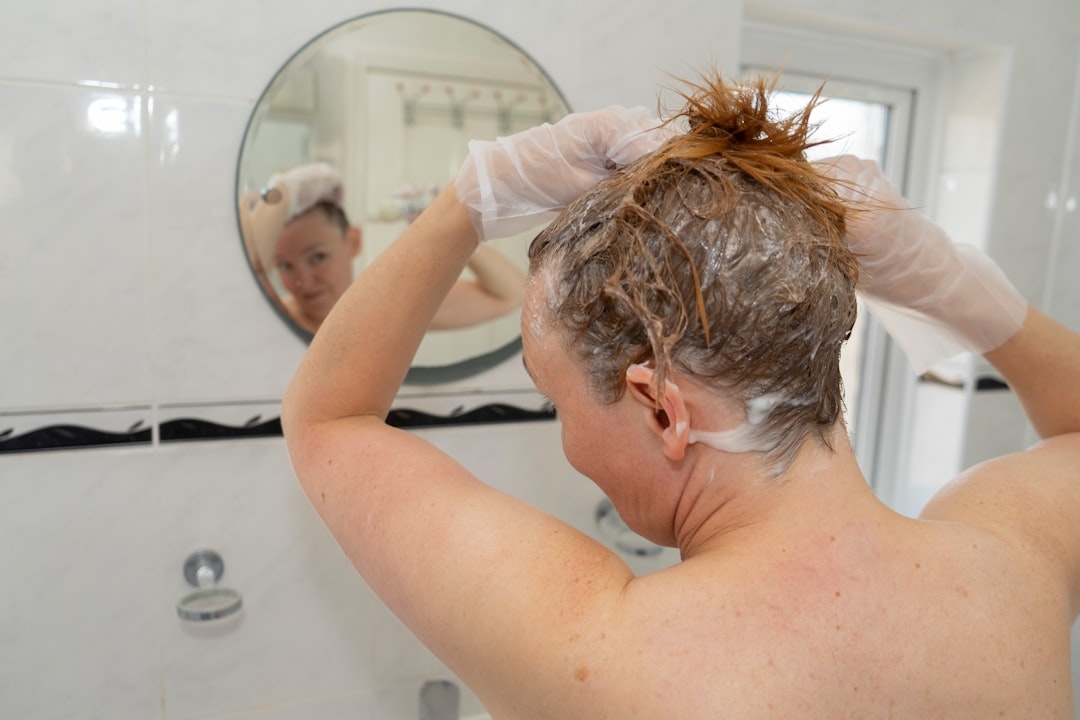
People who colour at home sometimes rinse minimally, thinking faster drying saves time. The result: blotchy colour (residual dye pooling in thick areas, pale in thin areas), premature fading (surface colour molecules escape immediately), and darkly stained hands and scalp (chemical residue). Proper rinsing actually saves time long-term because the colour lasts longer and looks better initially.
Over-Processing Damage
Developer left on even 10 minutes beyond recommended time causes cumulative damage: brittle hair, colour that’s too dark or uneven, scalp irritation. Cool rinsing immediately stops developer action. Skipping this means the chemical continues reacting, compounding damage.
The Salon Washing Process: What Exactly Happens
First Rinse: Lukewarm Water
Immediately after the timer sounds, stylists rinse with lukewarm water (approximately 32–35°C) to flush out bulk colour and developer. This isn’t the final rinse yet—it’s preliminary. Multiple quick rinses remove the majority of chemical residue.
This stage takes 30–45 seconds and removes approximately 80% of excess colour.
Colour-Safe Shampoo Application
Once preliminary rinsing is complete, stylists apply colour-safe shampoo (specific formulations without sulphates that won’t strip colour). They lather gently, focusing on the scalp and mid-lengths, avoiding aggressive scrubbing that could cause uneven colour.
This process takes 2–3 minutes. The shampoo removes remaining chemical residue and surface colour build-up. It’s gentler than standard shampoo because the hair is stressed from chemical processing.
Deep Conditioning Treatment
Whilst the shampoo processes, stylists apply deep conditioning treatment (or colour-protective mask) to the mid-lengths and ends. This compensates for moisture loss during colouring. Colour processing opens the cuticle and allows moisture to escape; the conditioning treatment immediately begins rehydrating.
This simultaneous application is efficient (conditioning whilst shampoo sits) and effective (addresses damage immediately). Professional treatments cost £8–£15 per application.
Final Cool Rinse
The absolutely critical final step: rinsing with cool water (18–22°C) whilst conditioning product is still in the hair. Cool water closes the cuticle around both the colour molecules and conditioning agents. This seals everything in.
The coolness is shocking—it makes people uncomfortable—but it’s essential. Warm final rinses undo most of the colour-sealing benefit. Salons do this despite client discomfort because they understand the chemistry.
What the Pros Know: Insider Information
Professional stylists recognise subtle variations: fine hair needs gentler rinsing to avoid colour stripping; thick hair needs more thorough rinsing because product penetrates deeper. Semi-permanent colours need cool but not icy rinses; permanent colours benefit from the coldest tolerable temperature. Different dye types (ammonia-free vs. traditional ammonia-based) rinse differently. A good stylist accounts for all these variables. At-home colourists typically cannot.
Cost Factors in Professional Post-Colour Washing

What You’re Paying For
- Colour-safe shampoo (professional-grade, £4–£8 per use—salons buy concentrated versions)
- Colour-protective conditioning treatment (£3–£6 per application)
- Stylist labour for thorough rinsing (approximately 5–8 minutes = £2–£4 of £60 appointment cost)
- Water usage (minimal cost but factored into salon overhead)
The post-colour wash is genuinely inexpensive for salons—perhaps £8–£15 in products and labour combined. Its impact on your colour longevity is dramatic: proper rinsing extends colour life by 2–4 weeks. That’s enormous value.
At-Home Post-Colour Costs
Colour-safe shampoo: £6–£10 per bottle (lasts 8–10 washes). Colour-protective conditioner: £8–£14 per bottle (lasts 4–6 applications). Using these correctly weekly for a month costs approximately £5–£8. This is negligible compared to the cost of recolouring if colour fades prematurely.
The Real-World Difference: One Woman’s Experience
Gemma coloured her shoulder-length dark hair to a rich auburn at home in January 2026, using a standard at-home kit. She rinsed with warm water for 20 seconds (wanting to get finished quickly) and used her regular shampoo the next day. By week 4, her colour had faded significantly and appeared brownish-orange instead of auburn. She recoloured in February, then went to a professional salon in March. The salon coloured her the same shade, but with proper cool-water rinsing and professional colour conditioner, the colour remained vibrant through May (an 8-week hold). The difference between 4 weeks and 8 weeks of colour longevity would have saved her £40–£60 in recolouring costs, plus the £15 professional colour plus shampoo and conditioner investment. She now understands why salons’ post-colour washing is non-negotiable.
At-Home Post-Colour Rinsing: How to Do It Correctly
Temperature Progression
Start with lukewarm (32–35°C), rinse for 30 seconds. Progress to cool (25–28°C), rinse for 30 seconds. Finish with cold (18–22°C), rinse for 20 seconds. This progression isn’t harsh on your system but effectively seals the cuticle progressively. Don’t jump straight to ice-cold; the temperature shock is unpleasant and unnecessary.
Rinsing Duration
Most people under-rinse. Run water through your hair for at least 60–90 seconds total (split across the three temperature stages). Colour residue is only fully gone when water runs completely clear—you might need 90–120 seconds. Don’t rush.
Shampoo and Conditioning
Apply colour-safe shampoo (not regular shampoo) after the first warm rinse. Lather gently for 2 minutes. Apply colour-protective conditioner whilst the shampoo is still wet in your hair. Leave for 2–3 minutes, then rinse with progressively cooler water as described above.
Frequency of Post-Colour Washing
Wait 48 hours before your first full shampoo. Colour molecules continue bonding during the first two days. Rinsing is essential immediately after colouring, but full shampooing should wait. After 48 hours, use colour-safe shampoo for the first week (every other day maximum), then transition to regular routine with colour-safe shampoo used weekly.
FAQ: Common Questions About Post-Colour Washing
Can I wash my hair the day after colouring?
Technically yes, but avoid it if possible. Wait 48–72 hours for best colour longevity. If you must wash sooner, use cool water, colour-safe shampoo, and the shortest wash possible (under 3 minutes). Colour molecules are still bonding; early washing reduces this bonding time and causes premature fading.
Why does my hair feel different immediately after professional colouring?
Colouring opens the cuticle and removes moisture. The deep conditioning treatment applied during post-colour washing partially rehydrates, but full recovery takes 48–72 hours as moisture reabsorbs and the cuticle fully closes. This is normal. Your hair will feel smoother by day two.
What if I only rinsed with tap water, not shampoo?
Tap water removes approximately 60–70% of residual colour and developer. It’s better than nothing but insufficient. You’ll experience faster colour fading and potential uneven colour tone. Using colour-safe shampoo removes 90%+ of residue and makes a noticeable difference in longevity.
Does professional colour rinsing really make that much difference?
Yes. Proper rinsing extends colour life from 4–5 weeks to 6–8 weeks depending on colour type and hair condition. That’s a 50% increase in colour longevity from one process difference. Over a year, this difference amounts to needing one fewer recolouring appointment.
Can I use hot water after colouring if I apply oils?
No. Hot water defeats the purpose—it opens the cuticle and allows colour molecules to escape, regardless of oil application. Oils cannot overcome the chemistry of heat on coloured hair. Always use cool water for the final rinse and when shampooing coloured hair throughout the colour’s life.
Making Post-Colour Care Your Standard
Understanding why salons wash your hair after colouring makes obvious sense once you understand the chemistry involved. The rinse isn’t optional finishing—it’s essential processing. At home, replicate the salon process: preliminary lukewarm rinse, colour-safe shampoo, conditioning treatment, and final cool rinse. This takes 8–10 minutes but extends colour life dramatically.
Invest in colour-safe shampoo (£6–£10 per bottle) and use it weekly for coloured hair indefinitely. This single product maintains colour and prevents the fading that makes you feel compelled to recolour prematurely. Combined with proper rinsing immediately after colouring, you’ll achieve colour longevity approaching professional results at home.