Contents:
- Understanding Thinning Scissors and Short Hair Dynamics
- Why Thinning Scissors Matter for Short Hair
- Selecting the Right Thinning Scissors for Your Needs
- A Word on Hair Thickness
- Step-by-Step Technique: How to Use Thinning Scissors on Short Hair
- Preparation and Section Placement
- The Basic Thinning Motion
- The Two-Hand Anchor Method
- Working Specific Areas
- Common Mistakes to Avoid
- Achieving Professional Results at Home
- Maintenance and Sustainability Between Cuts
- Advanced Considerations for Different Hair Types
- Straight Hair
- Wavy Hair
- Curly Hair
- Textured or Coily Hair
- Troubleshooting Common Issues
- Uneven Results
- Over-thinned Sections
- Persistent Bulky Feeling
- Frequently Asked Questions
- How often should I thin my short hair?
- Can I use regular scissors instead of thinning scissors?
- What’s the risk of thinning too much?
- Should I thin wet or dry hair?
- Can I thin curly hair the same way as straight hair?
- How much should thinning scissors cost?
- Conclusion: Building Your Thinning Confidence
The sound of hair hitting porcelain tile as you stand at your bathroom sink, watching short strands fall in a golden arc—that moment crystallises something many home hairstylists experience. You’ve invested in a decent pair of thinning scissors, watched a few tutorials, and now you’re standing before the mirror with genuine uncertainty. The blades feel heavier than your regular scissors. Your reflection shows sections that need thinning, but the question hangs: exactly how do you use these specialist tools without creating an uneven, choppy mess?
Understanding Thinning Scissors and Short Hair Dynamics
Thinning scissors occupy a unique space in hair cutting. Unlike standard scissors that cut hair bluntly from root to tip, thinning scissors feature a serrated or notched blade—typically one of the two blades contains the teeth, whilst the other remains smooth. This design removes approximately 30-40% of the hair they pass through, depending on the model. The mechanism works differently on shorter strands than longer ones, and this distinction matters enormously for the results you’ll achieve.
Short hair presents distinct challenges. Without length to absorb the thinning action, any reduction in density becomes visually obvious within days. A full-length cut on medium-length hair can disguise minor thinning mistakes, but with short styles—pixie cuts, crops, or bobs shorter than 5 centimetres—every snip reverberates through the overall shape. This isn’t a reason to avoid thinning scissors; rather, it’s motivation to understand the mechanics precisely.
The average thinning scissors cost between £15 and £45 for consumer-grade models suitable for home use. Professional-grade versions exceed £100, but for personal use on your own short hair, mid-range options (£25-£35) offer excellent results without professional expense. Brands like Jaguar, Kenchii, and Olivia Garden manufacture reliable entry-level thinning scissors stocked by most UK beauty suppliers.
Why Thinning Scissors Matter for Short Hair
Short hair often struggles with the density problem. When hair is short, it stands more upright due to reduced weight pulling it down. This creates an appearance of excessive bulk unless you actively thin it. Thinning scissors address this by reducing weight whilst preserving length, creating movement and texture that makes short styles appear lighter and more intentional.
The environmental angle deserves mention here. Thinning scissors allow you to extend the lifespan of a short cut by refreshing the texture between major trims. Instead of scheduling a full restyle every four weeks, strategic thinning every 2-3 weeks means you trim less frequently, reducing water usage at salons and extending the time between cuts. Over a year, this small adjustment contributes meaningfully to reducing salon waste.
Additionally, thinning works with your hair’s natural growth pattern rather than against it. Blunt cutting short hair can create a harsh perimeter that looks like a helmet as it grows out. Thinning feathers the ends and creates gradual density changes, making regrowth less pronounced and extending that fresh-cut feeling.
Selecting the Right Thinning Scissors for Your Needs
Three variables determine whether thinning scissors will work effectively for your short hair: blade angle, tooth count, and handle design. The blade angle—the angle at which the serrated blade meets the smooth blade—ranges from 20 to 45 degrees. Smaller angles (20-25 degrees) create more dramatic thinning and suit thick, coarse hair. Larger angles (35-45 degrees) remove less hair and work better for fine or medium hair.
Tooth count on the serrated blade typically ranges from 20 to 40 teeth per blade. Fewer teeth remove more hair with each pass; more teeth are gentler and more precise. For beginners working on short hair, 30-35 teeth provides a reasonable middle ground—aggressive enough to create noticeable texture change without the risk of over-thinning.
Handle ergonomics matter, especially if you’re working on your own head. Offset handles (where the grip sits at an angle) allow for better reach and control when working behind the ear and at the nape. Straight handles suit better for front and crown work. Many people choose scissors with one of each for flexibility.
A Word on Hair Thickness
Match your thinning scissors to your hair type. Fine hair demands delicate handling—you might use thinning scissors sparingly or select ones with higher tooth counts and larger blade angles. Thick, coarse hair can tolerate more aggressive thinning. If you have multiple textures (common with naturally curly short hair), you’ll benefit from scissors offering flexibility in how deeply you embed them into sections.
Step-by-Step Technique: How to Use Thinning Scissors on Short Hair
Preparation and Section Placement
Begin with dry hair. Wet hair compresses and appears thinner than it is; thinning wet hair often results in over-processing that becomes obvious once dry. Comb through completely, eliminating tangles. Work under good lighting—poor lighting obscures density variations and leads to uneven results. You’ll need a hand mirror plus your main mirror to see the back of your head clearly.
Divide your hair into sections. For short hair, typically four to six sections suffice: crown, two sides, back, and possibly a centre section if you have a fringe. Use clips to separate each section. The goal is isolating small enough areas that you can see what you’re thinning as you work.
The Basic Thinning Motion
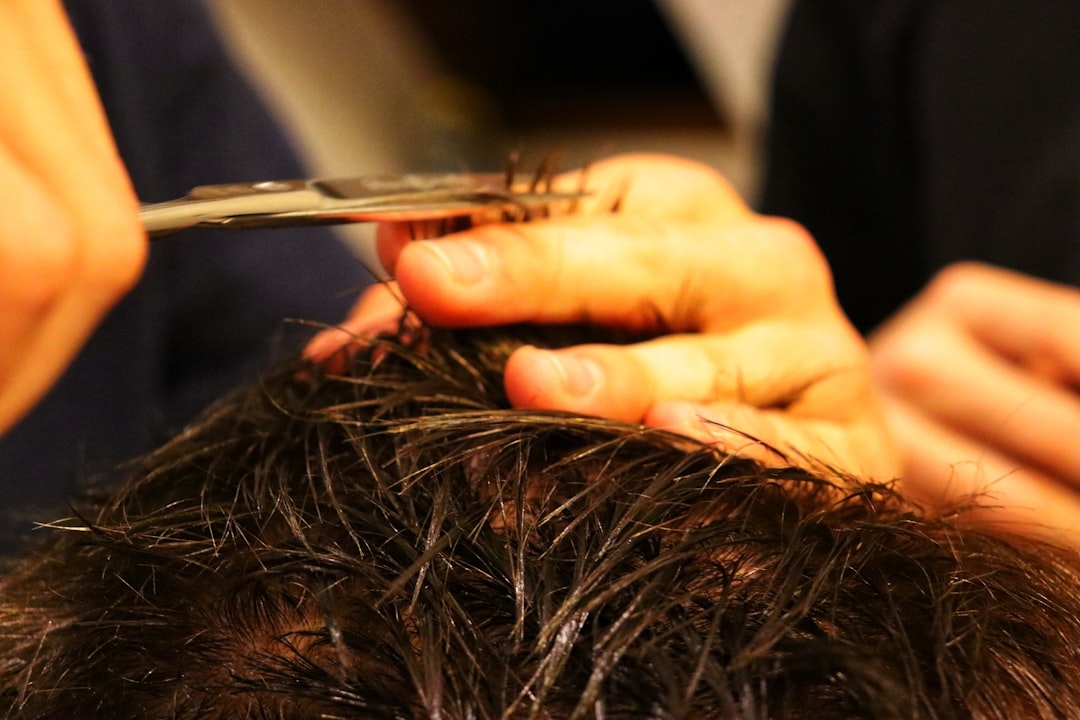
Hold a small subsection (roughly the thickness of a pencil) between your index and middle fingers, with the section elevated away from your head at about 45 degrees. Insert the thinning scissors about two-thirds of the way down the hair length—never at the roots, never right at the ends. Position them parallel to the section (not perpendicular) and make a single, slow, decisive cut. Close the scissors completely, then remove them.
The parallel positioning is crucial. Cutting perpendicular to your section creates blunt edges that look choppy. Parallel cuts work with the hair’s direction and create softer, more natural-looking thinning. After the first cut, move your scissors about 1.5 centimetres up the length and repeat. Make three to four passes per subsection depending on thickness and desired final density.
Open your fingers slightly and feel the weight reduction in each subsection. You should notice a clear difference after three passes, but the change should feel gradual, not dramatic. This tactile feedback helps you develop instinct about how many passes create your desired effect.
The Two-Hand Anchor Method
Many people find thinning their own short hair challenging because one hand tires holding the section. The two-hand anchor method addresses this. Use your non-dominant hand to hold the section as above, but brace that hand against your head using your thumb or palm as an anchor point. This stabilises the section and dramatically reduces fatigue, especially when working on the back and sides of your own head.
Working Specific Areas
Crown and top: These areas accept thinning gracefully. You can use more aggressive passes here—four to five—because hair naturally falls away from the crown, making density less noticeable and movement more important. Lift sections vertically and thin from mid-length downward.
Sides: Use restraint on the sides. Side sections frame your face, and over-thinning creates an unbalanced, wispy appearance. Use two to three passes per subsection. Work at a slight angle (about 60 degrees from your head) rather than flat against the scalp, creating more natural-looking density that still improves movement.
Back and nape: This area challenges most people because visibility is limited. Use your mirrors extensively. The nape area especially needs careful handling—thinning here is important for comfort and appearance, but mistakes become obvious because they break the clean line of the cut. Limit thinning to two to three passes and check frequently.
Fringe or bang sections: Avoid thinning the outer edge of a fringe; it should remain dense and blunt. Instead, thin the interior layers, working at an angle pointing downward and outward from the face. This maintains the structured look whilst improving the weight and movement of the underneath layers.
Common Mistakes to Avoid
Mistake one: thinning from the roots. Hair becomes progressively thinner toward the ends naturally. Thinning from roots creates a sparse, patchy appearance that’s nearly impossible to correct. Always leave the first 1.5 centimetres (minimum) untouched.
Mistake two: perpendicular cutting. Holding scissors perpendicular to the hair section and cutting straight across creates a blunt, choppy effect that defeats the purpose of thinning. Parallel cuts—where the blade aligns with the hair’s length—create infinitely better results.
Mistake three: over-thinning in single sessions. It’s impossible to put hair back. Thin conservatively. Five passes is typically the maximum for any section; three to four is safer when learning. You can always thin further in a week, but you cannot undo over-thinning.
Mistake four: ignoring your hair’s natural texture. Thick, coarse hair requires more thinning. Fine hair requires less. Curly hair requires different spacing than straight hair. Attempting a one-size-fits-all approach produces disappointing results. Observe your hair genuinely—feel its weight, assess its texture, then adjust your technique accordingly.
Mistake five: neglecting the transition between thinned and unthinned hair. If you thin heavily in the crown but barely thin the sides, the density gradient becomes visible and jarring. Think about how density should transition across your head. Typically, thinning should be heavier in areas that need movement (crown, top) and lighter in areas that need structure (sides, nape).
Achieving Professional Results at Home
The difference between amateur and professional thinning comes down to three factors: speed, consistency, and spatial awareness. Professionals work with absolute confidence—they know exactly how many passes each subsection needs based on a glance. Developing this instinct takes practice, usually six to eight thinning sessions on your own hair.
Consistency means treating similar areas similarly. If the left side of your head receives three passes per subsection, the right side should too. Use your mirrors constantly. Switch between your main mirror, hand mirror, and even phone cameras to see different angles. The back of your head presents particular challenge; take time checking it.
Spatial awareness involves understanding how visible different areas are. The top and front of your head are always visible to others; the back and nape are usually unseen. This doesn’t mean neglecting the back, but it does mean perfection matters slightly more in front. Allocate your accuracy accordingly.
Consider doing your first thinning session on an evening when you’re not going anywhere the next day. This allows you to assess results in daylight before important commitments. Hair settles and sits slightly differently 12-24 hours after thinning; what looked potentially too short at 8 PM often looks perfect by morning.
Maintenance and Sustainability Between Cuts
Strategic thinning extends the life of your short cut dramatically. Full cuts every four weeks can become full cuts every six weeks with thinning every two to three weeks in between. Over a year, this means potentially four to six fewer full cuts, reducing salon visits or home-cutting sessions.
Maintain your thinning scissors properly to extend their lifespan. Avoid cutting thick products, pins, or foreign objects. Rinse blades under warm water after use. Store them in a protective case or pouch. Professional sharpening costs £8-£15 and extends scissor life by several years. A pair of quality thinning scissors should last five to seven years with proper care.
If you’re environmentally conscious, this approach aligns well with sustainable practices. Frequent full haircuts mean more water use (salons average 27 litres per wash and cut) and more waste generated from trimmings. Using thinning scissors to extend cut lifespans reduces both resource consumption and waste production.
Advanced Considerations for Different Hair Types
Straight Hair
Straight hair is forgiving for thinning because the angle of cuts remains visually consistent. You can thin more aggressively here. Use four to five passes on crown and top sections. The straightness itself creates structure, so thinning removes excess weight without losing shape.
Wavy Hair
Wavy hair benefits enormously from thinning because waves compress short lengths, creating bulk that thinning alleviates. However, the inconsistent density can make some sections appear thinned whilst others still appear full. Account for this by thinning thicker waves more aggressively. Assess your hair when fully dry and styled—waves can hide density until they’re set.
Curly Hair
Curly short hair demands the most careful thinning approach. Curls collapse when weighted down, but they compress significantly even when thinned. Thin conservatively—two to three passes—and assess results when your hair is set in its natural curl pattern. Tight curls compress so much that moderate thinning often creates the illusion of aggressive thinning. Always start conservative; you can thin more next time if needed.
Textured or Coily Hair
Similar guidance applies to textured or coily hair. The compression ratio is extreme—a section that appears moderately thinned might appear very sparse once the curl pattern sets. Use minimal passes initially (two passes) and space them further apart along the length. Check results meticulously.
Troubleshooting Common Issues
Uneven Results
If one side appears thinner than the other, resist the urge to immediately thin the thicker side more. Instead, assess whether the difference is genuine or an optical illusion created by styling or angling. Sleep on it, restyle, then reassess. If it’s genuinely uneven, make only one additional pass on the thicker side. Often, one pass equalises the appearance.
Over-thinned Sections
If you’ve thinned too much and a section now appears sparse, the primary remedy is time. Hair grows roughly 12 centimetres per year, meaning visible recovery takes several weeks. In the interim, adjust your styling—use texturising products, change your parting, or style in ways that disguise the sparse area. For future sessions, this area needs zero passes for at least 4-6 weeks.
Persistent Bulky Feeling
If your short hair still feels excessively thick after thinning, you may be underestimating how much thinning is appropriate for your hair type. Thick, coarse hair can genuinely require four to five passes per subsection. Feel confident making more passes, but do so gradually across sessions rather than all at once. Each session, use one additional pass until you reach your comfort level.
Frequently Asked Questions
How often should I thin my short hair?
Every 2-3 weeks for active thinning; every 4-6 weeks for maintenance thinning. This varies based on your hair growth rate, thickness, and how rapidly the style begins feeling bulky. Start with monthly sessions and adjust frequency based on your results and comfort.
Can I use regular scissors instead of thinning scissors?
No. Regular scissors cut bluntly across the hair shaft, creating a visible edge that results in a choppy appearance. Thinning scissors’ serrated blade removes hair differently, creating soft, feathered edges. The results are visually distinct and significantly superior.
What’s the risk of thinning too much?
Over-thinning creates sparse, wispy sections that appear thin or even balding. For short hair, this becomes immediately visible. Recovery takes weeks as hair grows out. Always thin conservatively, especially when learning. You cannot undo thinning; you can only wait for regrowth or cut shorter to create apparent density.
Should I thin wet or dry hair?
Dry hair only. Wet hair appears thinner than it actually is due to compression and weight. Thinning wet hair inevitably results in over-processing that becomes obvious once dry. Always allow hair to fully dry before thinning.
Can I thin curly hair the same way as straight hair?
No. Curly hair compresses dramatically, making the visible impact of thinning more extreme. Use significantly fewer passes—two to three instead of four to five—on curly hair. Assess results in your hair’s natural curl pattern. What looks moderately thinned when stretched appears very thin when curled.
How much should thinning scissors cost?
Expect to pay £15-£45 for consumer-grade thinning scissors suitable for home use. This price range offers reliable quality and appropriate aggressiveness for personal use. Professional-grade scissors exceed £100 but aren’t necessary for home thinning of your own hair.
Conclusion: Building Your Thinning Confidence
Using thinning scissors successfully on short hair requires understanding three core principles: the mechanics of how these scissors work, the specific vulnerabilities of short hair to thinning mistakes, and the techniques that create visibly professional results. Start conservatively, observe your hair carefully between sessions, and adjust based on genuine results rather than assumptions.
Your first thinning session might feel awkward and uncertain. This is completely normal and temporary. By your third session, your hands will move with more confidence. By your sixth session, you’ll develop genuine instinct about how many passes different sections need. This progressive confidence transforms a procedure that felt risky into a routine maintenance task you execute comfortably.
The practical payoff extends beyond aesthetics. Strategic thinning between full cuts means fewer salon visits, reduced water consumption, less waste generated, and lower costs across the year. For short hair particularly, this approach creates a sustainable, cost-effective routine that keeps your style looking intentional and well-maintained across the entire growth cycle. Your next thinning session awaits—approach it with your new understanding, trust the process, and observe how your short hair transforms under your care.